Streamlining Operations with SuperMIA AI Workflow Automation
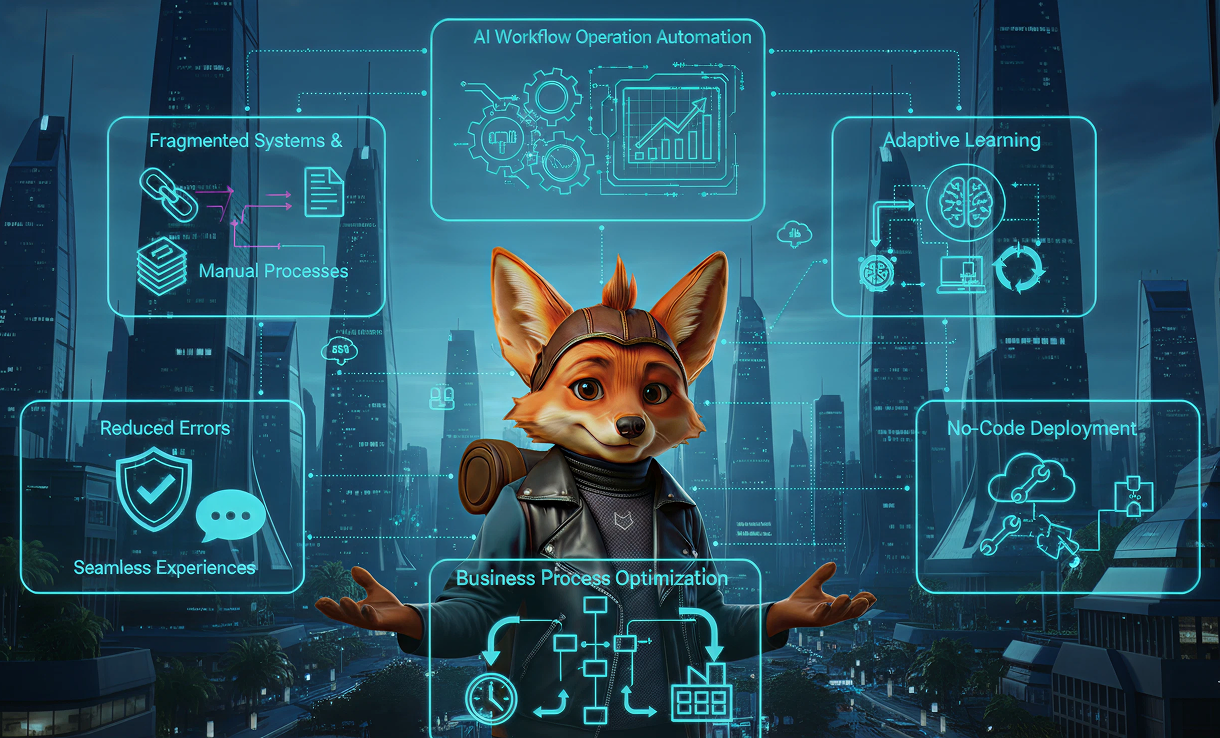
Table of Contents
- What is AI Workflow Automation?
- Why AI Workflow Automation Matters for Businesses
- AI Workflow Automation Strategies for Enterprises
- Use Cases of Business Process Automation with AI
- No-Code AI Workflow Automation: Democratizing AccessNo-Code AI Workflow Automation: Democratizing Access
- Best Practices for Automation with AI
- How SuperMIA Simplifies Intelligent Workflow Automation
- The Future of Workflow Automation with AI
- Conclusion
In today’s competitive business landscape, efficiency isn’t optional—it’s survival. Operations managers and business analysts are under constant pressure to do more with less, reduce errors, and deliver seamless customer experiences. Yet, many organizations still rely on fragmented systems and manual processes that slow growth and drain resources.
Enter AI workflow automation—the next evolution in business process optimization. Unlike traditional automation tools, which require rigid programming and predefined rules, AI-powered solutions adapt to changing inputs, learn from patterns, and improve outcomes over time.
With platforms like SuperMIA, businesses now have access to no-code AI workflow automation that combines the power of intelligent decision-making with ease of deployment. In this guide, we’ll explore strategies, benefits, and best practices for implementing AI workflow automation solutions that actually scale.
What is AI Workflow Automation?
At its core, workflow automation for business replaces manual, repetitive tasks with software that executes them faster and more consistently. Adding AI to the mix takes it further: the system doesn’t just follow rules—it interprets data, understands context, and makes intelligent decisions.
For example:
- A traditional automation tool can send an invoice reminder every 30 days.
- An AI workflow automation platform can analyze payment history, detect late patterns, and adjust reminders dynamically.
This shift from “rules” to “intelligence” is what makes intelligent workflow automation so powerful for modern enterprises.
Why AI Workflow Automation Matters for Businesses
Businesses that embrace AI automation don’t just save time—they transform the way they operate. Key benefits include:
- Reduced Operational Costs: Automating routine processes eliminates redundant labor and reduces human error.
- Improved Productivity: Teams focus on high-value tasks while AI handles repetitive workflows.
- Faster Decision-Making: Intelligent automation software analyzes data in real-time to recommend next best actions.
- Scalability: AI-powered workflows can handle thousands of tasks simultaneously without additional headcount.
- Customer Satisfaction: Consistent, fast responses improve customer experiences across industries.
For operations managers, this translates into better resource allocation and for business analysts, it means data-driven insights to optimize workflows further.
AI Workflow Automation Strategies for Enterprises
Adopting AI automation isn’t just about installing software. It requires a strategic approach aligned with business objectives. Here are AI workflow automation strategies enterprises can apply:
1. Start with High-Impact Workflows
Target processes that are repetitive, time-consuming, and error-prone. Examples include order processing, employee onboarding, IT helpdesk, and customer support ticketing.
2. Integrate Across Systems
AI workflow automation solutions are most effective when connected to your CRM, ERP, HRMS, and other enterprise tools. Integration ensures smooth data exchange and eliminates silos.
3. Prioritize Scalability
Choose an AI workflow automation software that can grow with your business. Early wins -should expand into end-to-end process automation.
4. Balance AI and Human Involvement
Automation doesn’t mean eliminating people. Instead, design workflows where AI handles routine steps and escalates complex decisions to humans.
5. Focus on Analytics & Continuous Improvement
Adopt AI workflow automation implementation as an iterative process. Use dashboards to track efficiency, cost savings, and identify new opportunities for automation.
Use Cases of Business Process Automation with AI
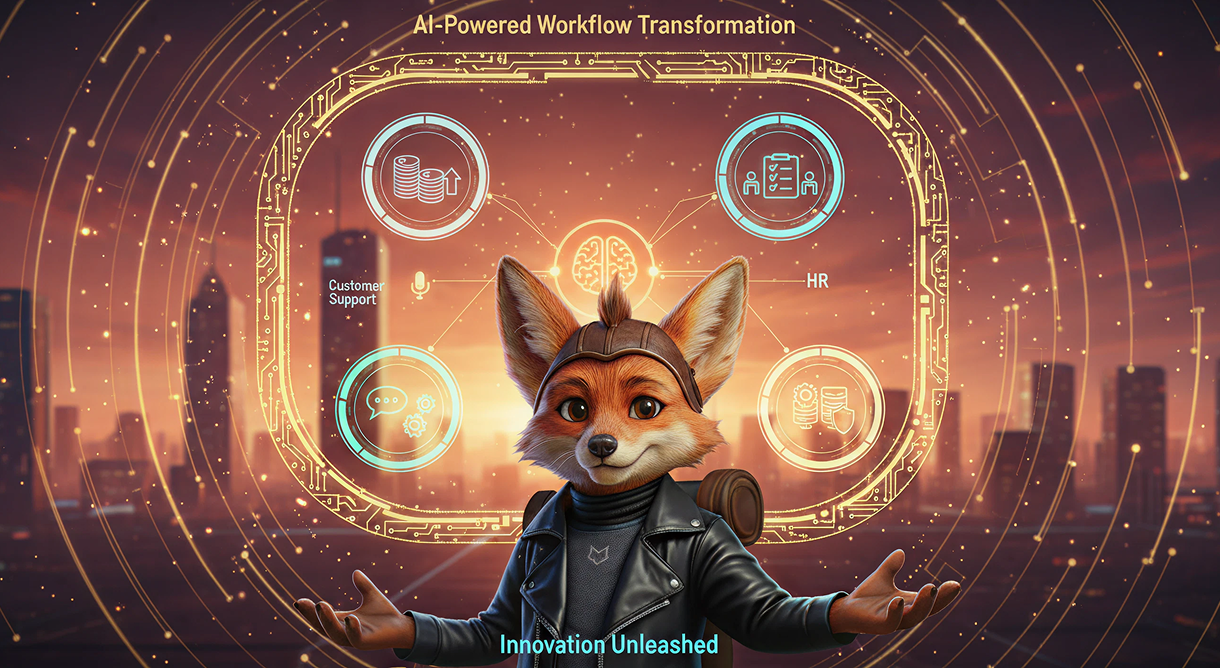
AI workflow automation isn’t confined to one department—it’s transforming entire organizations. Common use cases include:
- Finance: Automating invoice approvals, expense reporting, and fraud detection.
- HR: Managing recruitment workflows, employee onboarding, and payroll queries.
- Customer Support: Deploying AI workflow automation solutions to resolve FAQs, route tickets, and provide instant responses.
- Sales & Marketing: Lead scoring, campaign automation, and personalized outreach at scale.
- IT Operations: Incident management, monitoring, and self-healing infrastructure alerts.
By automating these workflows, businesses can achieve end-to-end operational efficiency while freeing employees to focus on innovation.
No-Code AI Workflow Automation: Democratizing Access
Historically, only large enterprises with big IT budgets could afford sophisticated automation. But the rise of no-code AI workflow automation platforms like SuperMIA changes that.
Operations managers without technical backgrounds can now:
- Drag-and-drop workflow steps
- Configure AI triggers
- Deploy automated processes in hours instead of months
Meanwhile, developers still retain flexibility through API integrations, making the platform suitable for both business users and IT teams.
This democratization ensures automation is no longer limited to technical teams—it’s accessible to entire organizations.

Best Practices for Automation with AI
To ensure successful adoption, enterprises should follow automation best practices with AI:
- Set Clear Goals: Define what success looks like—reduced processing time, fewer errors, or higher throughput.
- Map Existing Processes: Document workflows before automating to avoid replicating inefficiencies.
- Start Small, Scale Fast: Pilot with one department, measure results, then expand organization-wide.
- Involve Stakeholders: Collaborate with both technical and non-technical teams to design effective workflows.
- Ensure Security & Compliance: Choose an intelligent automation software that aligns with industry regulations (GDPR, HIPAA, etc.).
How SuperMIA Simplifies Intelligent Workflow Automation
SuperMIA’s AI workflow automation platform is designed for modern businesses looking to scale without complexity. Key differentiators include:
- No-Code Development: Build and launch workflows visually.
- Multi-Model AI Support: Leverage GPT-4o, Claude, Gemini, and more for accuracy and adaptability.
- Enterprise Integrations: Connect with CRM, ERP, HR, and IT systems seamlessly.
- Voice + Chat Automation: Go beyond text-based processes to include inbound/outbound calls.
- Analytics Dashboard: Track ROI, efficiency gains, and user engagement.
- Scalability: From startups to large enterprises, workflows adapt as the business grows.
For operations managers, this means faster deployment and reduced dependency on IT teams. For business analysts, it offers rich insights to refine and optimize processes continuously.
The Future of Workflow Automation with AI
The shift to intelligent workflow automation represents more than efficiency—it’s about building adaptive enterprises. Businesses that embrace AI will not only save costs but also innovate faster and stay competitive.
In the coming years, AI workflow automation software will evolve to handle predictive actions, proactive customer engagement, and self-optimizing workflows. Enterprises that adopt now will be ahead of the curve.
Conclusion
For operations managers and business analysts, AI workflow automation solutions are no longer optional—they are essential for driving efficiency, scalability, and competitive advantage.
Platforms like SuperMIA empower organizations to implement no-code AI workflow automation, streamline operations, and deliver measurable ROI.
The journey starts with identifying the right workflows, implementing best practices, and scaling automation across the enterprise. With the right strategy, businesses can turn repetitive processes into intelligent, self-optimizing workflows that power long-term growth.
Ready to streamline your operations with AI?
Explore SuperMIA AI Workflow Automation: www.supermia.ai
FAQs
It is the use of AI-powered platforms to automate business processes, enabling intelligent decision-making, reduced errors, and higher efficiency.
Benefits include reduced costs, scalability, faster processing, real-time analytics, and improved customer experiences.
Platforms like SuperMIA let non-technical users build automated workflows visually without coding, while still offering APIs for developers.
Finance, HR, IT, sales, and customer support are the most common areas where AI-driven automation drives measurable impact.
Start with high-impact workflows, integrate across systems, balance AI with human oversight, and scale gradually with continuous monitoring.

Harikrishna Patel is the founder of MIA – My Intelligent Assistant, the AI automation platform built under Botfinity Inc. in Dallas, Texas. With 15+ years in software engineering, AI/ML, and enterprise solution design, he focuses on creating practical, scalable AI tools that help businesses automate support, workflows, and operations through voice and chat. Hari blends strong technical depth with product strategy to make AI accessible and usable for real-world business needs.
Recent Blogs
-
AI Agent 14 Jan, 2026
Tailored AI Solutions with AgenticAI: Why Customization Is the Real Competitive Advantage
-
AI Automation 12 Jan, 2026
Benefits of AI Workflow Automation: Why It’s Becoming a Boardroom Priority
-
AI Agent 09 Jan, 2026
How to Create Marketing Campaigns Easily with MIA
-
AI Agent 07 Jan, 2026
How MIA’s AI Simplifies Your Hiring and Saves Hours of HR Work
-
AI Agent 05 Jan, 2026
AI Is No Longer an Experiment – It’s Enterprise Infrastructure