
Table of Contents
The AI assistant every real estate agent wants does the three admin jobs that eat your day: it answers and qualifies every inbound call, books showings straight onto your calendar, and keeps CRM follow-up moving 24/7 — even at midnight and on Sundays, when buyers actually call. It replaces the admin, not the agent, and costs a fraction of hiring an ISA.
Meet the assistant that answers every call →
Key takeaways
- The assistant every agent wants does three jobs: answers/qualifies calls, schedules showings, and runs CRM follow-up.
- Speed wins listings: 73% of buyers pick the first agent to respond, and most calls come after hours.
- It gives a solo agent back 15+ hours a week — the time lost to the phone, the calendar, and the CRM.
- It costs a fraction of an ISA and works nights, weekends, and holidays without overtime.
- It replaces the admin, not the agent — negotiation, relationships, and judgment still need you.
What a real estate AI assistant actually is
An AI assistant for real estate agents is software that handles the admin side of the job around the clock. It answers and qualifies inbound buyer and seller calls, books showings onto your calendar, and keeps CRM follow-up moving — so you spend your time on the work that actually closes deals.
Picture your worst Tuesday: you're mid-showing when three calls come in, two leads from Sunday still haven't heard back, and your calendar is a mess of double-bookings. The assistant every agent wants quietly handles all of that in the background.
This isn't a far-off idea — it's live today. SuperMIA for real estate runs exactly this kind of assistant. Below is what it actually does, honestly, including where it stops.
The three jobs it takes off your plate
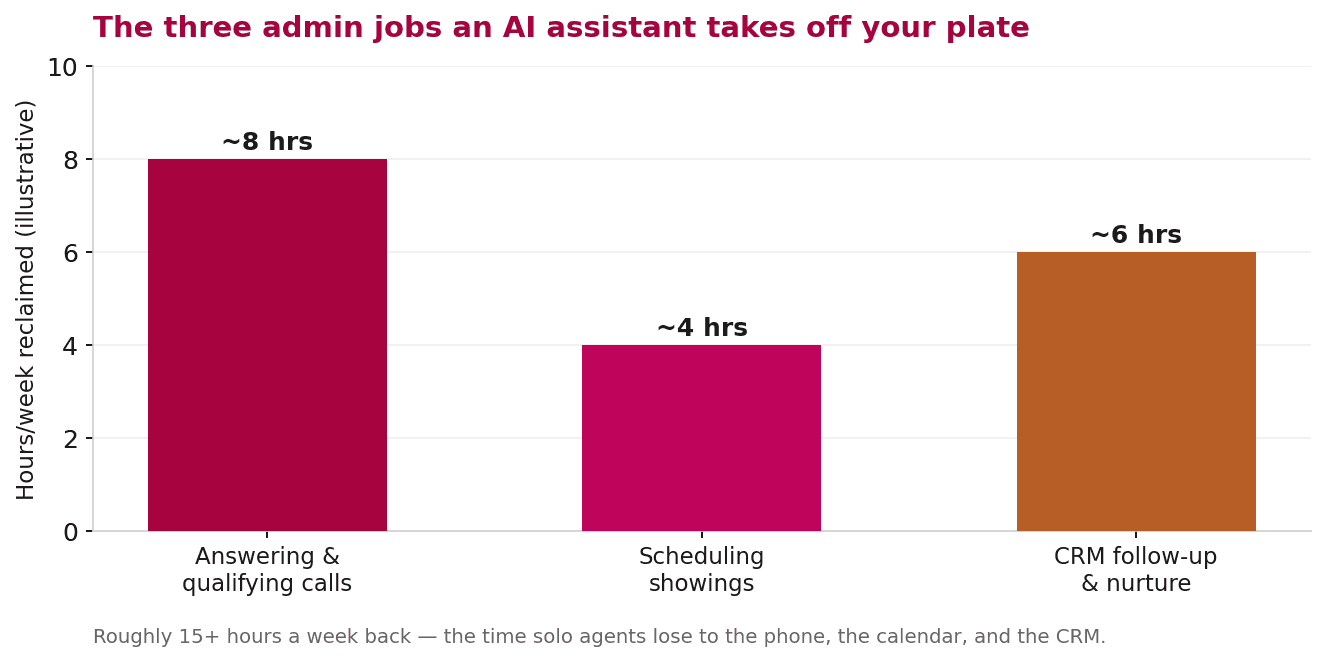
Strip away the hype and an AI assistant does three things an agent hates doing. Together they're the 15+ hours a week solo agents lose to admin.
1. It answers and qualifies every call
A buyer calls at 9pm about your listing. Instead of voicemail, the assistant picks up on the first ring, sounds human, asks about budget, timeline, and pre-approval, and captures it all. The call you'd have missed becomes a qualified lead instead of a competitor's commission.
This is where it earns its keep, because most buyer calls land after hours. An AI voice agent for real estate goes deep on the missed-call math and the voice side specifically.
2. It books showings on your calendar
Scheduling is death by a thousand texts — proposing times, resolving conflicts, sending reminders. The assistant checks your real availability during the call, books the showing or listing consultation on the spot, and sends the confirmation and reminder automatically. No back-and-forth, no double-bookings.
3. It keeps CRM follow-up moving
The lead you didn't follow up with is the deal you lost. The assistant logs every contact, triggers the drip, sets the reminder, and drafts the personalized follow-up — so nobody falls through the cracks, even the leads that aren't ready for six months.
On the text and web side, a real estate chatbot captures and qualifies leads 24/7, and the real estate AI lead-gen playbook covers the nurture sequences that turn cold leads warm.
See all three jobs handled in one assistant →
Why speed decides the deal
Real estate is a speed-to-lead business. The agent who responds first usually wins — and the numbers are stark.
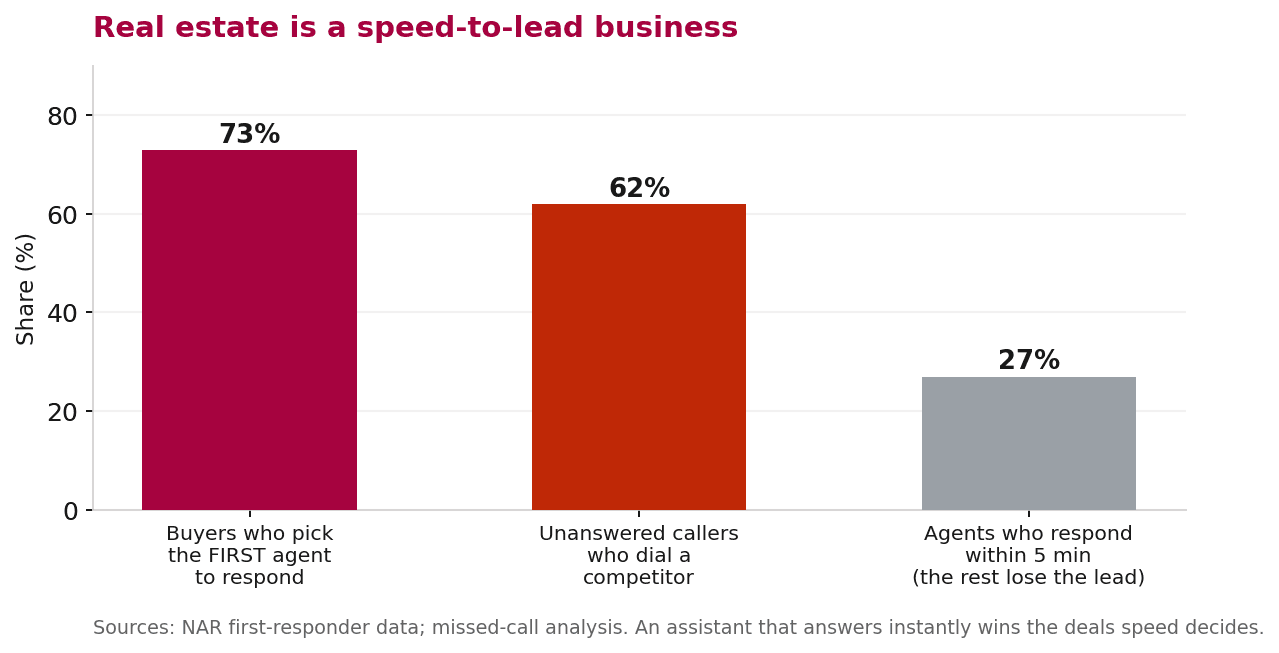
Per NAR's buyer research, the large majority of buyers go with the first agent who responds, and most callers who don't get an answer simply dial the next name on the list. A human can't answer at midnight on a Sunday. An assistant can — and that's the deal it saves.
What it costs vs hiring an ISA
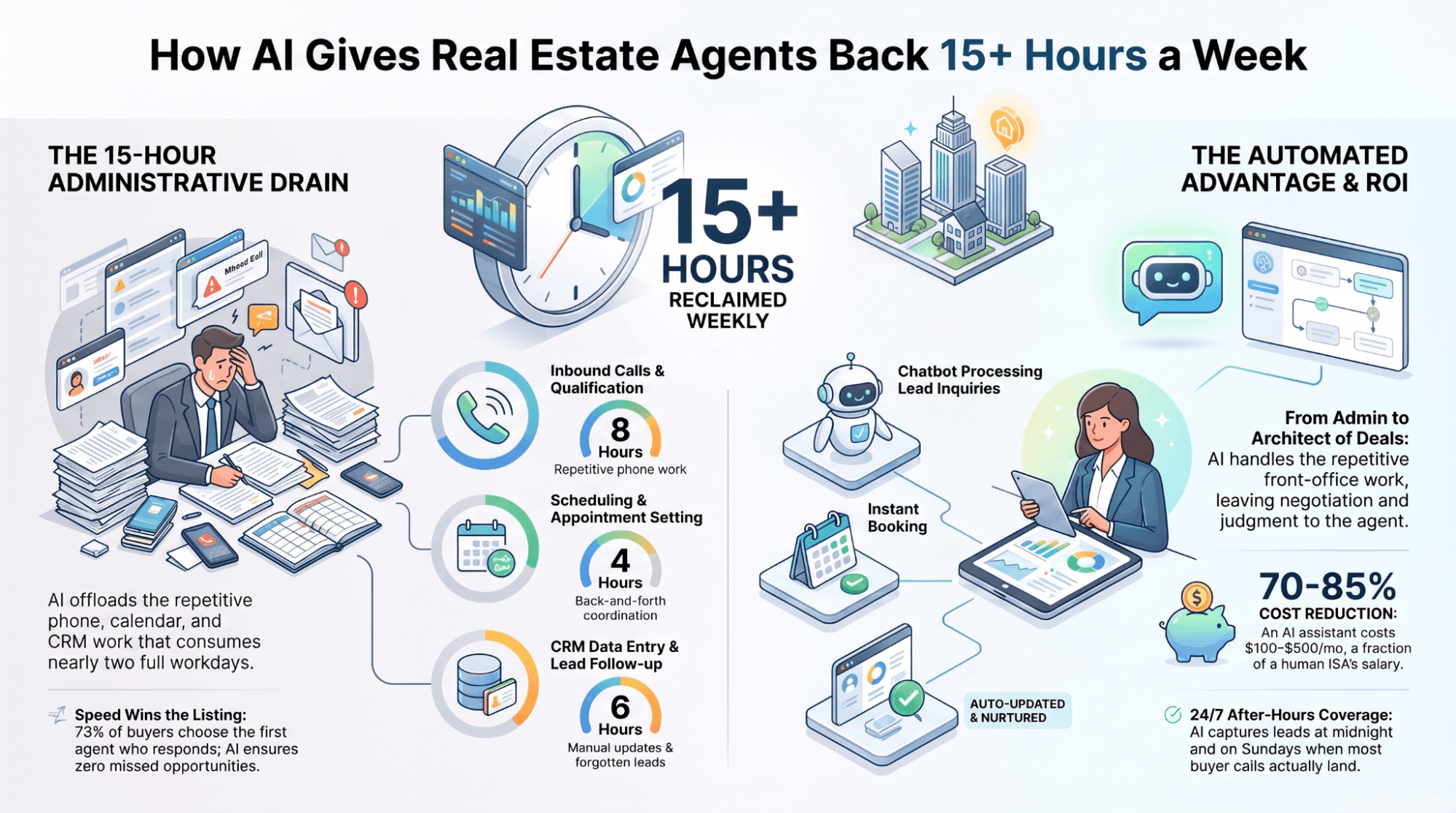
A human inside sales agent (ISA) costs a salary plus benefits and only works business hours. An AI assistant runs from roughly $100–$500 a month depending on volume — about 70–85% less — and covers nights, weekends, and holidays at the same flat price.
The math is forgiving. One won listing is worth thousands, so a single after-hours lead the assistant captures can cover a year of the subscription. For a solo agent, it's the closest thing to hiring help without the headcount.
What still needs you (the honest part)
Here's what a self-ranking listicle won't tell you: the assistant replaces the admin, not the agent. It's genuinely good at the repetitive front-office work, and genuinely not a substitute for you where it counts:
- Negotiation. Reading the other side, structuring an offer, knowing when to hold — that's judgment, and it's yours.
- Relationships. The trust that earns a referral and a repeat client is built by a human, not a script.
- Pricing strategy and local nuance. The assistant knows your calendar; it doesn't know that one block runs $40k higher.
- The complex call. When a seller is emotional about a lowball offer, the assistant should hand off to you — fast, with context.
Wholesalers and investors running outbound campaigns have a different playbook — AI cold calling for wholesalers covers that side. For everyone else, the rule is simple.
The honest rule. Let the assistant own the calls, the calendar, and the follow-up. Keep the negotiation, the relationships, and the judgment. That's the split that actually wins more deals.
Frequently asked questions
What is an AI assistant for real estate agents?
An AI assistant for real estate agents is software that handles the admin side of the job around the clock. It answers and qualifies inbound buyer and seller calls, books showings onto your calendar, and keeps CRM follow-up moving with reminders and nurture messages, so you spend your time on the work that closes deals.
Can an AI assistant answer calls and book showings?
Yes. A capable AI voice assistant answers on the first ring, asks buyer and seller qualifying questions like budget, timeline, and pre-approval, checks your calendar, and books the showing or listing consultation during the call, then logs the contact in your CRM. This is where it earns its keep, because most buyer calls come after hours.
How much does an AI real estate assistant cost?
Most AI assistants for agents run from about $100 to $500 per month depending on call volume and features, which is roughly 70 to 85 percent less than hiring a human inside sales agent. It works nights, weekends, and holidays at the same flat price, with no overtime or benefits.
Will an AI assistant replace real estate agents?
No. It replaces the admin, not the agent. It handles repetitive calls, scheduling, and follow-up, but negotiation, relationship building, pricing strategy, and judgment still need a human. The best setups keep the agent in the loop and hand off complex conversations to a person.
Is an AI assistant worth it for a solo agent?
For most solo agents, yes. It gives back roughly 15 or more hours a week lost to the phone, the calendar, and the CRM, and it captures after-hours leads that would otherwise go to a competitor who answered first. Because a single won listing can be worth thousands, the math usually works quickly.
Start with the job you hate most
You don't have to hand over everything at once. Pick the job that's costing you deals — usually the missed after-hours calls — let the assistant own it, and watch the qualified appointments show up on your calendar.
Want to hear it answer a call the way your buyers would? Book a demo and we'll show SuperMIA for real estate handling calls, scheduling, and follow-up for an agent like you.

Vicky Lalwani
Vicky Lalwani is Marketing Manager at SuperMIA, focused on practical AI education, buyer's guides, and solution explainers that help business teams evaluate and adopt conversational AI across support, sales, and operations.