
Table of Contents
- Build vs. buy: the quick verdict
- What AI chatbot development actually involves
- What it costs to build in-house
- The hidden costs most teams miss
- What it costs to buy a platform
- Build vs. buy vs. adapt: the three-way comparison
- When building is the right call
- When buying (or adapting) wins
- The decision: a simple framework
- Frequently asked questions
Quick Answer
Build a custom AI chatbot only if it is core intellectual property or your data cannot touch a third party, and you have a dedicated AI team. Building often starts around $10,000 to $150,000+ upfront but lands near $242,000 to $581,000 over three years once infrastructure, maintenance, and talent are included. Buying a platform starts in the hundreds per month. For most teams, buying or adapting wins.
Key takeaways
- Building can look affordable at kickoff, but the 3-year total is usually much higher than expected.
- Maintenance, infra, and specialist talent dominate the long-term cost curve.
- Buy when chatbots are supporting infrastructure, not your differentiator.
- Adapt is the middle path: faster than build, more control than rigid off-the-shelf tools.
- Decide based on ownership and outcome, not just technical possibility.
Build vs. buy: the quick verdict
In 2026, most engineering leaders reach the same answer: do not build fully in-house unless you must. As platform maturity grows, rebuilding common chatbot capabilities rarely creates a durable edge. Build when the chatbot is core product IP or data constraints demand it; otherwise buy or adapt and keep your team focused on core product value.
What AI chatbot development actually involves
AI chatbot development is more than prompt writing. A production build includes model decisions, conversation design, API integrations with CRM/helpdesk, escalation logic, QA pipelines, and continuous evaluation. If the labels feel mixed, see the difference between chatbots, voice agents, and AI agents.
The ongoing work is where teams get surprised: models drift, integrations change, and real users expose gaps that test scripts miss. That persistent operational load is why TCO matters more than launch cost.
What it costs to build in-house
A basic custom chatbot can run around $10,000 to $15,000, while enterprise-grade implementations with custom workflows and multilingual support can reach $50,000 to $150,000+. Typical timeline is 6 to 14 weeks for the first version. Talent is also expensive and constrained; the Bureau of Labor Statistics continues to show tight demand for advanced technical roles, and analyst coverage from Gartner and Forrester consistently shows that build-vs-buy total cost of ownership is dominated by ongoing run cost rather than the initial build.
To understand where the $10K-$150K+ range actually goes, break a build into its component lines. Each one is a recurring engineering commitment, not a one-time spend:
- LLM and inference: model access or hosting, token costs at production volume, and the engineering to manage prompts, context, and fallbacks. This line scales directly with usage and rarely shrinks.
- Infrastructure: hosting, vector storage for retrieval, queuing, and the scaling work needed to survive traffic spikes without latency or outages.
- Integration: connecting to CRM, helpdesk, scheduling, and internal APIs - usually the single most underestimated line, because each integration must be built, secured, and maintained as those upstream systems change.
- Observability and evaluation: logging, quality scoring, drift detection, and the dashboards needed to know whether the bot is actually resolving conversations or quietly degrading.
- Conversation design and QA: intent coverage, escalation paths, tone, and the continuous testing that keeps quality from regressing as you add capabilities.
Sum those lines over three years and the picture changes from the kickoff budget to a $242,000-$581,000 commitment. For most teams that decision is the same one they'd make about any non-core system: a focused AI chatbot bought or adapted from a platform delivers the capability without the standing engineering bill.
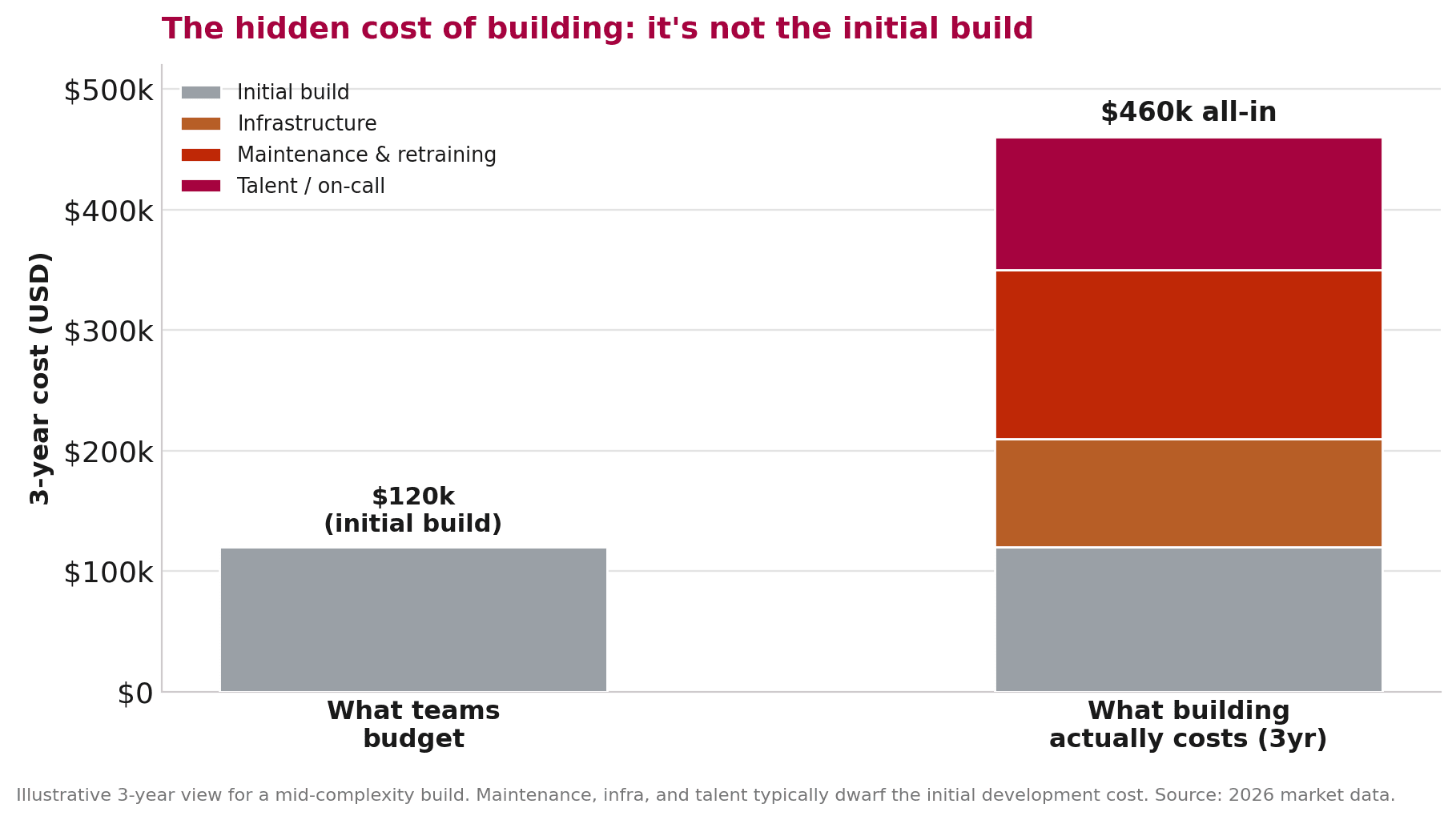
Figure 3. Budgeted build cost vs. real 3-year cost.
The hidden costs most teams miss
- Infrastructure: model inference, hosting, observability, and peak-load scaling.
- Maintenance and retraining: continuous tuning as products, policies, and behavior shift.
- Talent and on-call: specialist engineering support to keep quality and uptime high.
- Opportunity cost: roadmap tradeoffs while engineers maintain non-core systems.
The most expensive of these is rarely a line item on the original budget: opportunity cost. Every engineer-week spent keeping an in-house bot healthy is a week not spent on the product that actually differentiates your business. Over three years, the question stops being "can we build it?" - most strong teams can - and becomes "is this the best use of our scarcest resource?" For the majority of teams, the honest answer is no.
Maintenance is also lumpier than teams expect. Model providers update or deprecate versions, upstream APIs change their contracts, and real user behavior drifts away from your test set. Each of these triggers unplanned work that lands on whoever owns the bot, often at the worst possible time. A platform absorbs this churn behind its own SLA; an in-house build makes it your on-call rotation's problem.
What it costs to buy a platform
Buying flips the economics: model infrastructure, security hardening, and maintenance are bundled into the platform, so teams pay a subscription and launch quickly. This is why many teams go live in days or weeks, then iterate with configuration instead of full-code ownership. If you are comparing options, use this conversational AI platform buyer checklist.
Build vs. buy vs. adapt: the three-way comparison
The old binary misses the practical third path. Adapt means starting from a customizable platform and shaping business logic, integrations, and experience without building every layer from scratch.
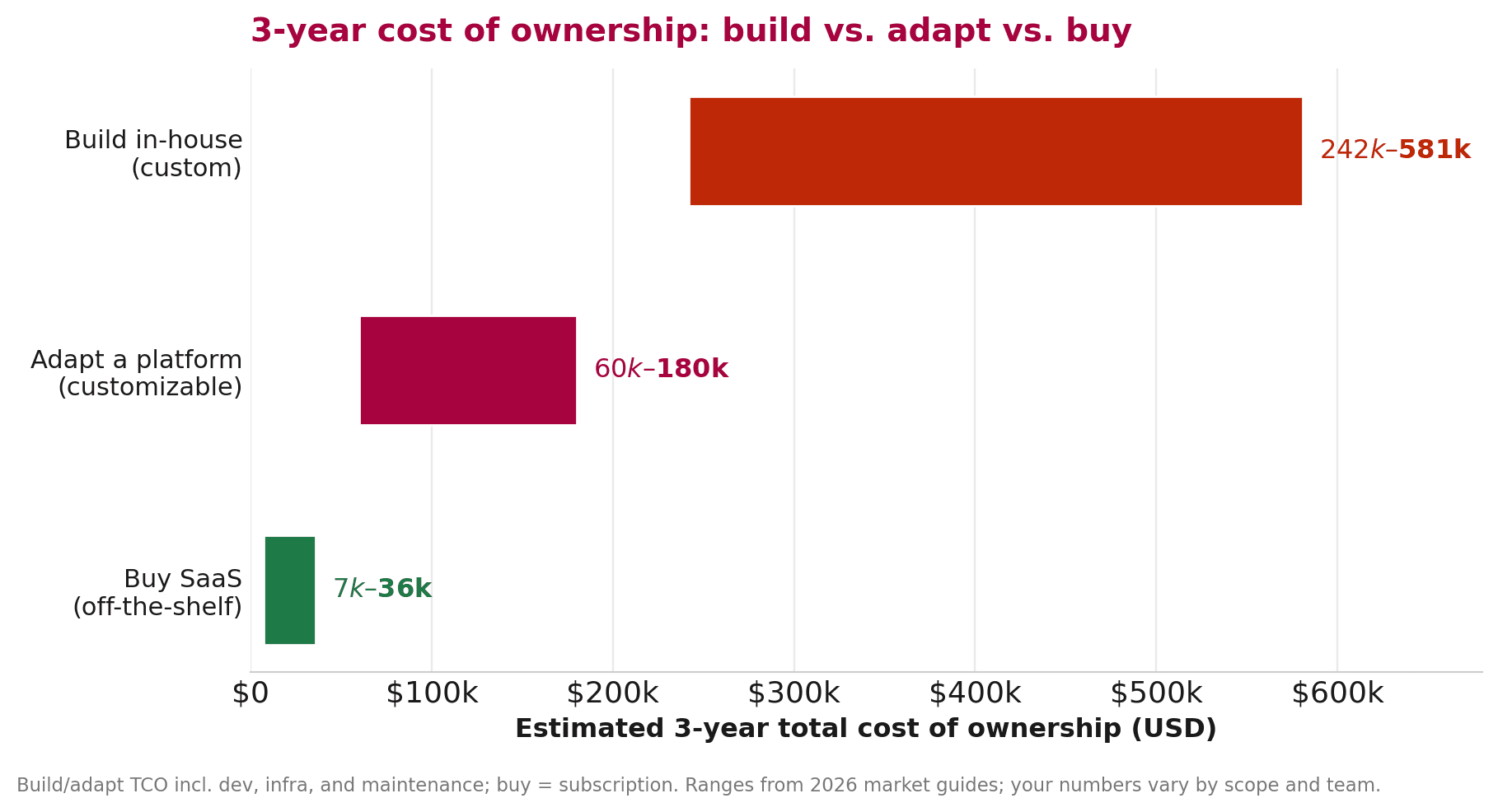
Figure 1. Estimated 3-year TCO by path.
| Factor | Build | Adapt | Buy |
|---|---|---|---|
| Time to launch | Months | Days to weeks | Days |
| Upfront cost | $10K to $150K+ | Low to moderate | Lowest |
| 3-year TCO | $242K to $581K | $60K to $180K | $7K to $36K |
| Control | Highest | High | Lower |
| Maintenance burden | High (yours) | Low | Lowest |
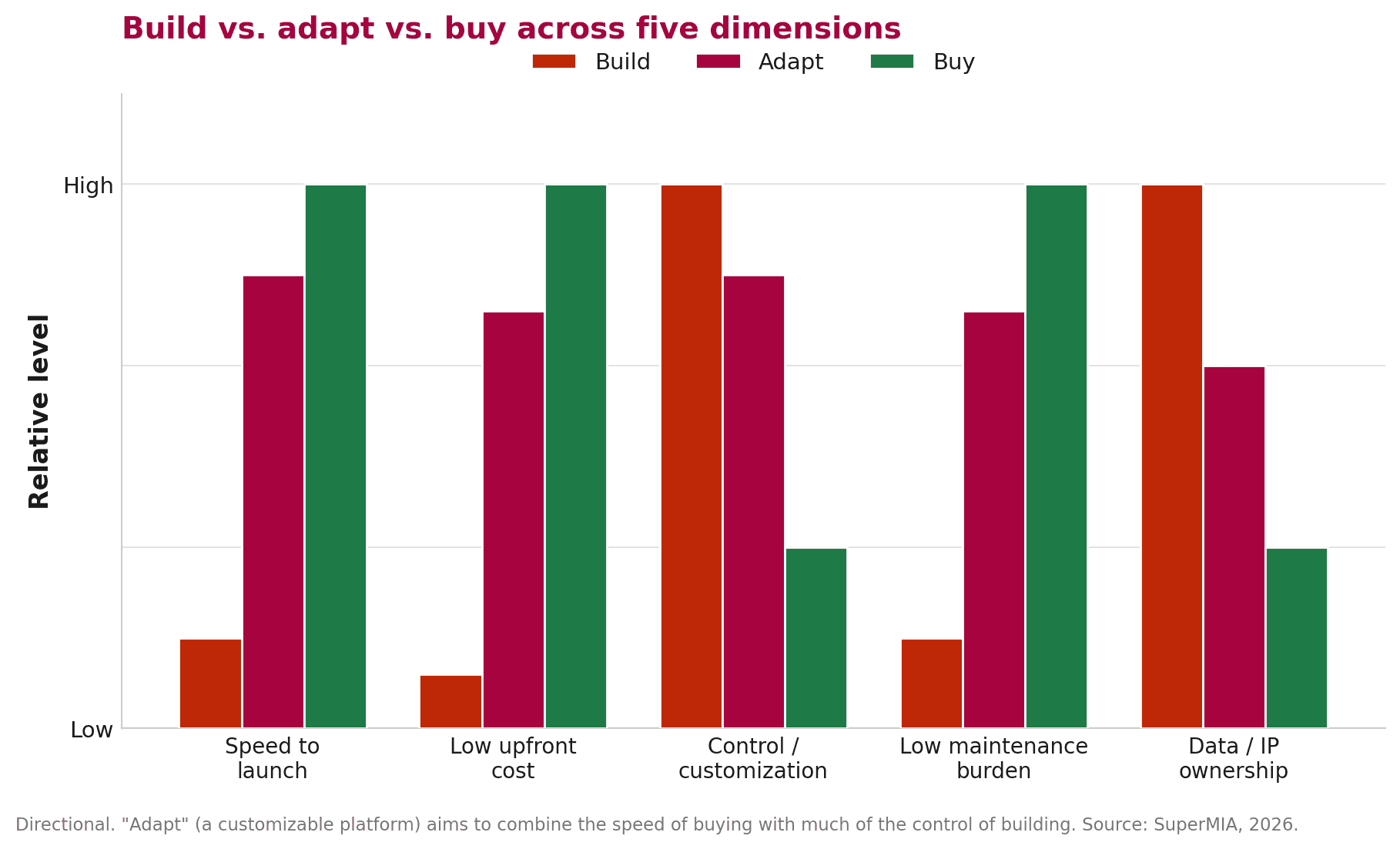
Figure 2. Build vs. adapt vs. buy across five decision dimensions.
When building is the right call
- The chatbot is core product functionality and defensible IP.
- Regulatory or contractual constraints block third-party data handling.
- You need deep proprietary integration no vendor supports.
- You have a dedicated AI team that can maintain pace long term.
Concretely, building wins in a handful of recognizable situations. A company whose product is a conversational interface - a consumer AI assistant, a vertical copilot sold to customers - has no choice but to own the stack, because the chatbot is the thing they monetize. A defense or healthcare organization under data-residency rules that forbid sending data to any third party may be forced to build even when a platform would otherwise fit. And a team with a genuinely novel interaction model that no vendor supports - say, a real-time simulation tied to proprietary hardware - will find that adapting a platform costs more in workarounds than building cleanly from scratch. Outside cases like these, building usually means re-creating commodity capability at premium cost.
When buying (or adapting) wins
Buying or adapting is usually stronger for support automation, FAQ containment, and operational workflows where launch speed matters more than owning every layer. If your chatbot is not the product itself, moving faster with a platform is commonly the better business decision.
Adapting deserves special attention because it captures most of the upside of building with a fraction of the risk. You inherit the platform's infrastructure, security hardening, and model maintenance, then layer your own business logic, integrations, and brand voice on top. That means you get differentiated behavior where it matters to customers, while the vendor absorbs the undifferentiated heavy lifting - inference, scaling, observability - that would otherwise consume your engineers. For the majority of teams whose chatbot supports the product rather than being the product, adapt is the path that balances control, speed, and three-year cost best.
The decision: a simple framework
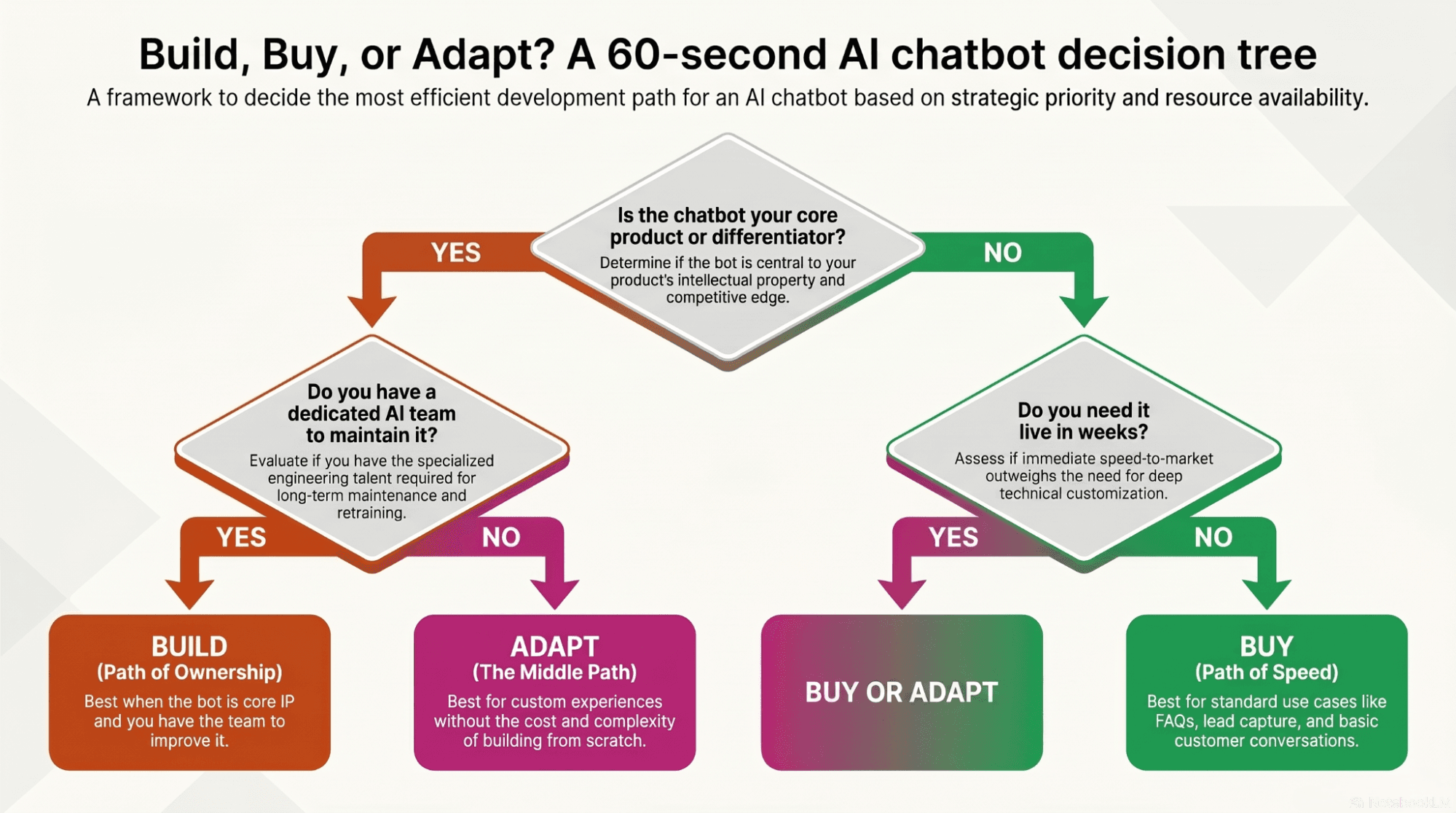
Use two questions: Is the chatbot part of your core competitive advantage? If not, buy or adapt. If yes, can your current team build and maintain it at market speed? If no, adapt. If yes, build.
This framework deliberately puts strategy before technology. Plenty of teams can build a competent chatbot, so "can we?" is rarely the deciding question - "should we own this for the next three years?" is. Running the two questions in order keeps the decision honest: it forces you to separate the chatbot's role in your business from the engineering team's enthusiasm for building. When the answers point to adapt - as they do for most teams - you get meaningful control over behavior and data without signing up for the full lifetime cost of ownership. Whichever path you choose, validate it with a scoped pilot on a real, high-volume use case before committing the full budget, so the decision rests on measured results rather than projections.
Where SuperMIA fits (the adapt path)
SuperMIA Personalised MIA is designed for teams that want control without a full custom build. You can train on your data, connect CRM/helpdesk workflows, and launch quickly on the SuperMIA platform with predictable pricing from published plans.
See the adapt path in action.
Review your current flow, estimate effort, and see how quickly your use case can go live.
Book a demo →Frequently asked questions

Harikrishna Patel
Harikrishna Patel is the founder of MIA – My Intelligent Assistant, the AI automation platform built under Botfinity Inc. in Dallas, Texas. With 15+ years in software engineering, AI/ML, and enterprise solution design, he focuses on creating practical, scalable AI tools that help businesses automate support, workflows, and operations through voice and chat.